2026-09-13
MCT Autologous Exosomes vs. Stem Cell Injections: Mechanisms in Skin Recovery
Understand how MCT autologous exosomes differ from traditional stem cell injections, how cellular signaling and growth factors work, and how to approach skin rejuvenation.
MCT Autologous Exosomes vs. Stem Cell Injections: Mechanisms in Skin Recovery

How do you care for dull skin that has lost its elasticity? |
Why does my skin feel so rough and depleted lately? |
When skin feels rough, dehydrated, and lacking elasticity, interest naturally turns toward skin regeneration treatments.
As you explore stem cell skin injections,
you will often encounter seemingly similar terms such as exosomes, PRP, and growth factors.

Here, it is essential to make a distinction first.
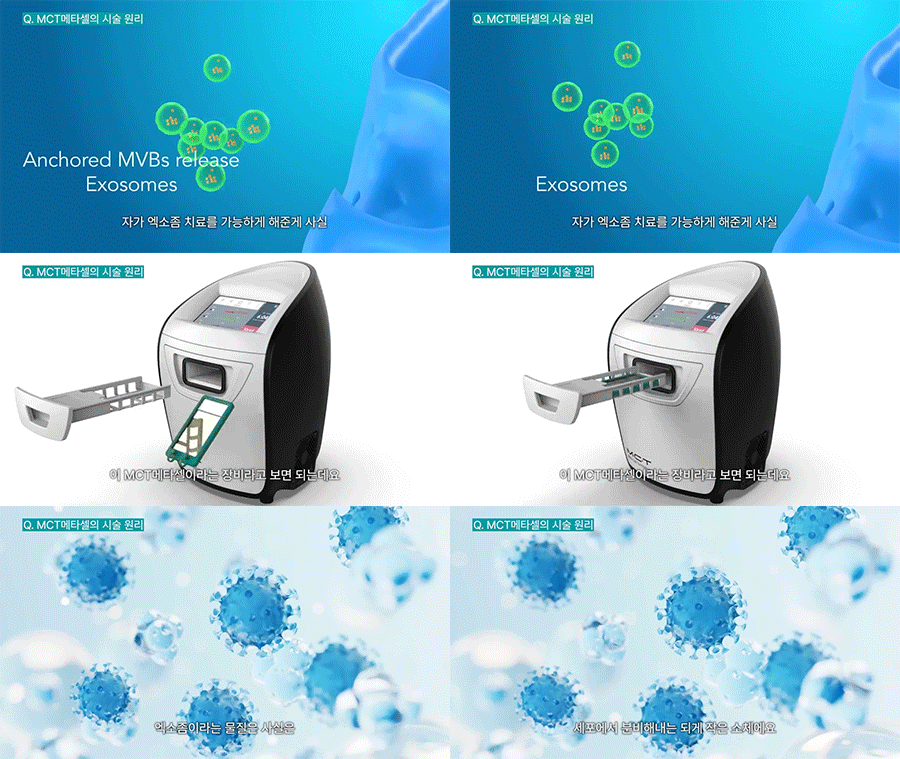
MCT autologous exosomes operate differently from injecting actual stem cells directly into the skin.
This method isolates platelet-rich components from your own blood,
activates them through a specialized process, and then delivers them to the skin.
Rather than assuming all procedures labeled "stem cell skin injections" follow the same principle,
it is important to understand where the components are sourced and how they are processed and utilized.
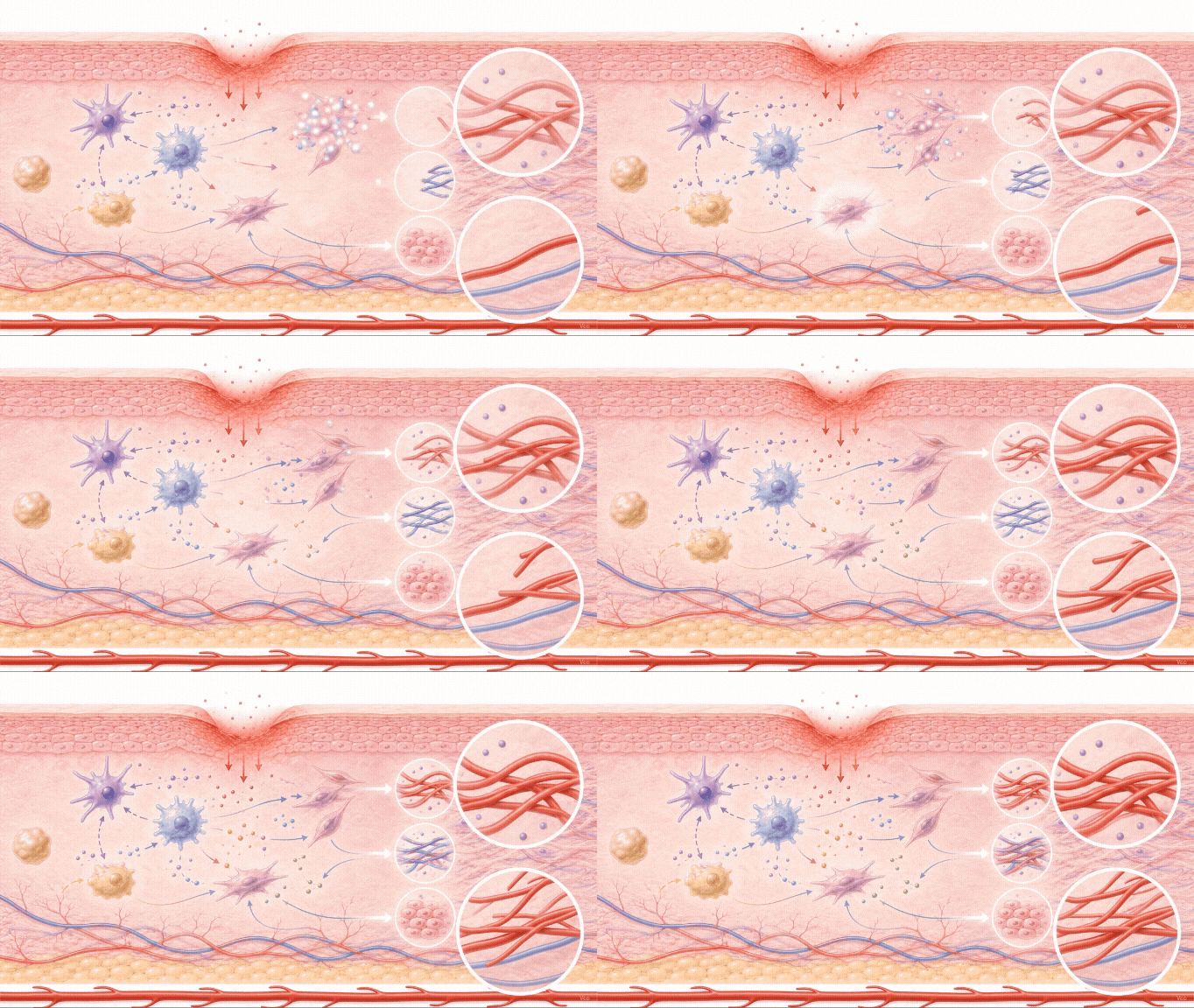
Skin recovery is not a process triggered simply by delivering large quantities of a single specific ingredient.
When stimuli act on the skin, various cells communicate by exchanging signals,
triggering a cascade of responses involved in tissue repair and the synthesis of collagen and elastin.
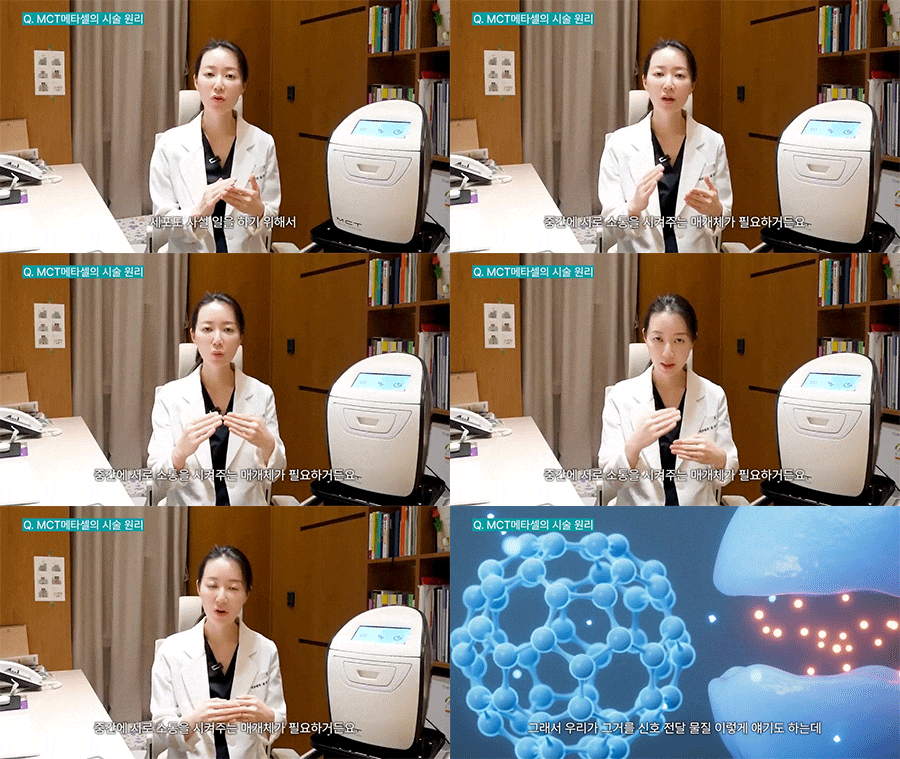
Exosomes are tiny extracellular vesicles involved in this intercellular information exchange.
Simply put, they act as key messengers that transmit diverse biological signals between cells.
If you encounter the term "exosome" while researching stem cell skin injections,
it is beneficial to consider not only what ingredients are introduced into the skin, but also what signaling processes are activated within it.

This is where MCT autologous exosomes stand out.
Instead of simply administering an isolated compound,
they activate patient-derived autologous components before applying them to the skin.
Because it leverages components extracted from your own blood, both exosomes and various growth factors are highlighted throughout this process.
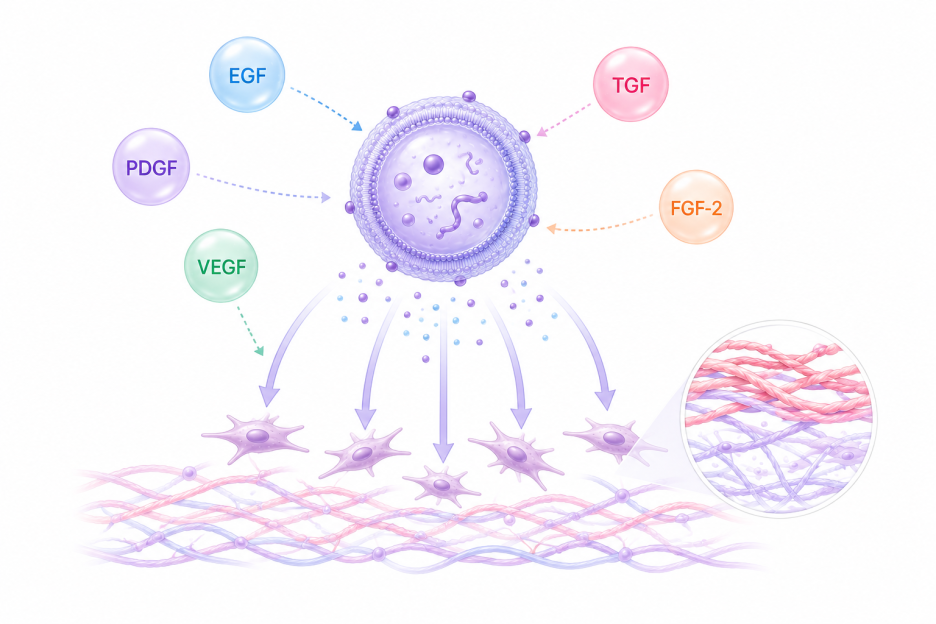
| MCT Exosomes involve growth factors such as EGF, PDGF, TGF, FGF-2, and VEGF. While the names may sound complex, growth factors are proteins involved in cellular signaling during cell proliferation, migration, and tissue repair. Therefore, when evaluating stem cell skin injections or MCT autologous exosomes, rather than focusing on a single ingredient, it is far more insightful to examine how the multiple factors involved in skin recovery are harnessed. |

Related research reports that PRP subjected to the MCT activation process
can exhibit elevated concentrations of certain growth factors.
However, these values do not automatically translate to identical skin improvements for every individual.
In actual clinical studies, while measurable differences were observed in specific wrinkle-related parameters,
equivalent changes were not consistently observed across all metrics, such as skin elasticity or pigmentation.
Why, then, are MCT autologous exosomes commonly discussed in the context of regeneration?
Those seeking stem cell skin injections often focus first on the concept of "regenerative power."
What should be examined first, however, is what specific changes are most prominent in your skin.
Whether your main concern is fine lines,
rough skin texture,
or an overall loss of elasticity,
the therapeutic focus and approach must adjust accordingly.
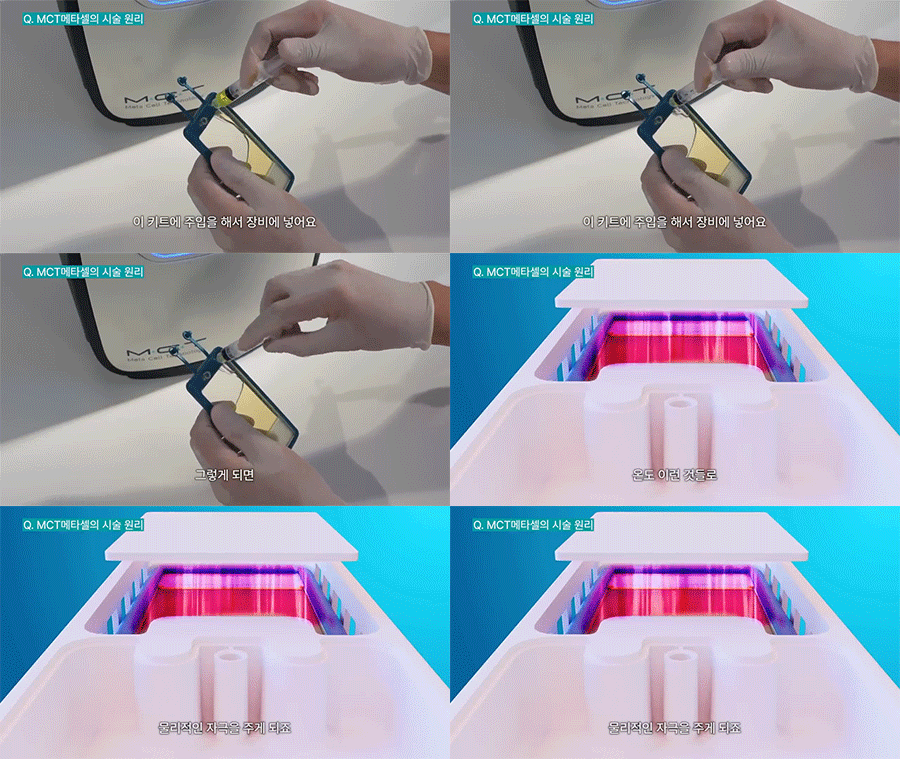
MCT exosomes utilize the comprehensive spectrum of components within autologous material, rather than relying on a single isolated agent.
Many patients seeking stem cell skin injections experience concurrent concerns such as decreased elasticity, fine lines, and uneven texture.
With age, natural collagen and elastin synthesis diminishes,
and ultraviolet exposure and repeated irritants can alter the skin's microenvironment for self-repair.
Even so, having these concerns does not mean MCT exosomes alone can serve as a universal solution for every skin problem.

One of the most frequent questions regarding stem cell skin injections is treatment frequency.
The ideal number of sessions varies depending on the degree of skin damage, loss of elasticity, presence of inflammation, and other factors.
Because baseline conditions and aesthetic goals differ from person to person, an individualized assessment of skin status and objectives is essential before establishing a set schedule.
Here is another crucial distinction to bear in mind.
Stem cell skin injections and MCT are sometimes conflated as identical concepts.
Even when referred to interchangeably in casual discussions, their underlying mechanisms and active components must be understood as distinct.

When considering stem cell skin injections or MCT autologous exosomes,
instead of focusing merely on what is being injected or in what volume,
it is far more important to identify the primary changes occurring in your skin and clarify the appropriate treatment direction.
Not all regenerative treatments are identical.
The right approach begins with identifying what your own skin truly requires.
Thank you for taking the time to read,
this has been Head Director Dr. Sang-Ah Yoon.

Inquiries |




























Frequently Asked Questions
Are MCT autologous exosomes the same procedure as stem cell skin injections?
No, the two procedures differ in their underlying principles and the active components utilized. MCT autologous exosomes do not involve injecting whole stem cells; instead, they isolate and activate platelet-rich components from the patient's own blood before applying them to the skin.
What primary growth factors are present in MCT exosomes?
They involve essential growth factors such as EGF, PDGF, TGF, FGF-2, and VEGF. These growth factors act as vital signaling proteins involved in cellular proliferation, migration, and tissue repair processes.
How many MCT autologous exosome sessions are typically recommended?
The optimal number of sessions varies depending on the individual's degree of skin damage and loss of elasticity. Rather than setting an arbitrary session count in advance, it is essential to consult with a medical professional to evaluate your skin status and clarify treatment goals.
Can MCT exosomes resolve all skin concerns?
No, a single procedure cannot solve every skin problem. Even in clinical studies, while notable differences were identified in specific wrinkle indicators, equivalent improvements were not universally observed across all parameters like elasticity and pigmentation.